

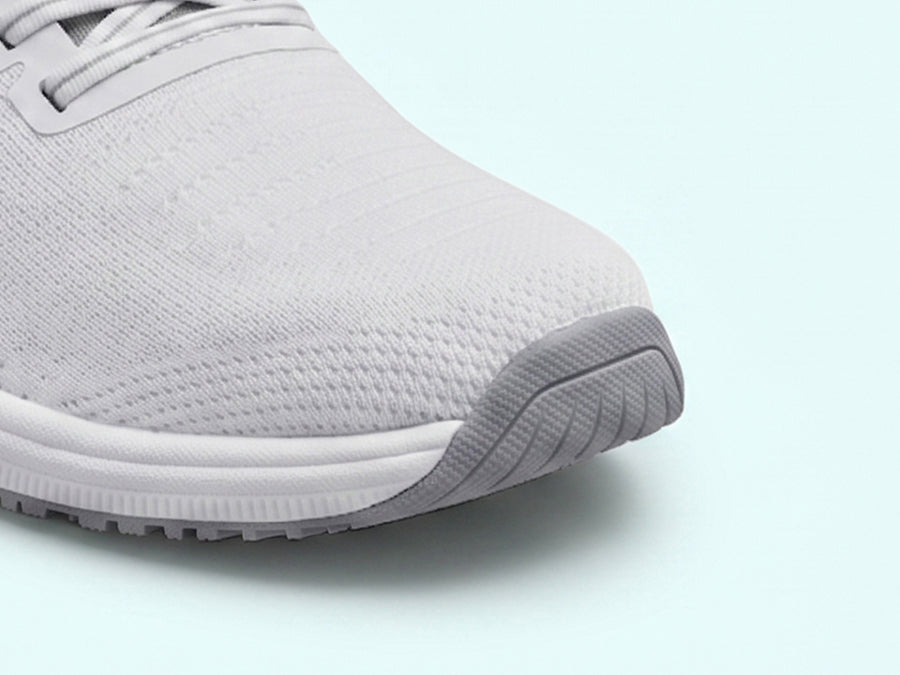
 Don't ignore your toes when they cry out for help. The world can be cruel to them, especially when they have to face it in ill-fitting shoes.
What your toes actually need is the correct environment for them to fit without being squeezed, move about freely and proper protection, which they won’t get if you end up buying the wrong shoes. Whether you have a common foot condition, or if your feet are model material, wearing footwear with poor design that overlooks the forefoot and midfoot can cause more harm than good.
Here is everything you need to know about how to find shoes that fit you correctly, protect your toes and help alleviate existing foot conditions.
Where should your toe be in a shoe?
Your longest toe should be about half an inch, which is about the width of your finger, from the front of the shoe.
Here's an age-old trick that still works like a charm when you’re checking for the right shoe fit to protect and fit your toes properly:
- Place your thumb between your big toe and the tip of the shoe. Your thumb should be able to press down all the way to the bottom of the shoe, without any toes getting in the way. If this doesn’t happen, try a larger shoe size.
- While standing up, let your toes spread naturally and wiggle to make sure they have enough room for natural toe splay and comfortable movement.
- Now, try standing on your toes to make sure that your big toe’s bend matches the shoe bend. If you feel the joint of your big toe is either before or after the shoe bend, it’s not a good fit.
- Always try on and buy shoes towards the end of the day after your feet have been through activity. Even if you don't suffer from edema or swelling, your feet, including toes, will be different after many hours on your feet.
- Make sure to try on shoes with the pair of socks you usually wear or intend to wear with these shoes. There's nothing more annoying than trying on shoes with a pair of thin store peds and liners, only to come home and realize they are too tight with your thicker athletic socks.
What is the toe box of a shoe?
The technical name for the part of the tip of the shoe is toe box.
The toe box gives your toes protection from impact and if you choose wide toe box shoes, it will give you enough room for your toes to move comfortably.
It’s worth knowing that the width span of your toes, from your big toe to your little toe, should be wider than the balls of your feet. If you suspect your feet might be wider than average, read about the signs you may have wide feet to better understand.
Here are some other toe box realities to keep in mind:
Worst case scenario of an ill-fitting toe box
Cramping or crushing, leading to blisters, corns, calluses, ingrown toenails black toenails, and general foot pain. And if you already suffer from foot conditions, like hammertoes and bunions, tight shoes with such an ill-fitting toe box can not only be painful, but also worsen your condition. Love your toes, but don't ever let them get hugged too tightly.
The best kind of toe box to look for
The one that offers extra depth and has a stretchable, breathable upper as well as a soft, padded interior that conforms to your foot’s unique shape, keeps your feet dry to ward off bacteria build up and odors, and prevents irritation. This matters just as much in wide toe box running shoes, where letting your feet move and flex naturally supports healthy biomechanics with every stride, almost as if you were barefoot.
Not all toe boxes are actually boxy
The word “box” may be misleading, because toe boxes come in a wide variety of shapes and styles, designed to fit different toe shapes. The right toe box style is individual and depends on your specific foot shape and size, as well as whether or not you have any foot conditions, but it should always be long and wide enough to accommodate your toes comfortably.
Toe boxes to avoid
Narrow toe boxes rarely give your toes enough toe room to move or spread out. Unless they are wide enough, avoid toe boxes with pointed toes, often found in dress styles, pumps, high-heeled shoes, and ballet flats. If your feet are not shaped in a pointed manner, how can they possibly fit into a pointy shoe?
This pointed style will prevent your toes from lying flat and can cause many conditions described above, including metatarsalgia—commonly known as a stone bruise—which causes pain and inflammation in the metatarsal bones and the ball of the foot.
The only shoes not to feature a toe box
Open toe shoes, sandals and flip flops.
Since toe box refers to the enclosure for your toes, open toe shoes that expose your toes do not have a toe box. This means that most warm weather closed toe shoe styles or ones designed to wear during the summer months are ideal for your toes, and allow maximum toe movement.
Should my toes touch the end of my shoes?
If the shoes are too short for your feet, your toes might rub against the edge of the toe box, exacerbating existing foot problems, such as hammertoes, and causing injuries and even deformities.
On the flip side, if the toe box is too big, aside from making you more prone to accidents and falls, the natural foot reaction would be to try to keep the shoe on your feet by scrunching up the toes. This could result in bunions (which is ironic, because you might think that wider shoes would provide some relief from bunions), as well as hammertoes. In addition, shoes that are too big could also apply excessive pressure on your toes and balls of the foot, causing corns, calluses and metatarsalgia, and disrupting your natural stride.
So, no, your toes should not touch the end of your shoes. More specifically, you should leave at least half an inch between your toes and the end of the shoe.
What does a big toe box mean?
A big toe box, more commonly referred to as a wide toe box, means the shape of the front of the shoe is generous, round, tall, and does not taper at the ends - it's shaped like a human foot rather than a pointed shoe.
The size of the toe box is also relative to the width of the shoe. So, for example, an extra-wide shoe will have a much bigger toe box than a medium-width shoe. As you go up in width, every aspect of the shoe is bigger and wider, all the way up to the widest sizes available.
Quality shoe brands offer shoes not only in various length sizes, but also in a variety of widths, to accommodate all types of foot shapes and widths, including ones that are on the wider side, so anyone who needs a wide shoe can still find the right fit.
What foot conditions need a big toe box?
Understanding the significance of a properly fitting toe box is crucial, especially when dealing with foot conditions that can impair daily activities. A well-designed toe box, or roomy toe box, is extremely important, not only for preventing a variety of foot issues but also for providing relief from existing conditions. It is particularly beneficial for individuals looking for shoes for wide feet, ensuring comfort and proper fit without compromising on style or functionality. Explore our specialized footwear collections to find the correct shoes for your needs:
- Shoes for Hammertoes: Our shoes provide ample room for hammertoes, reducing pressure and preventing further discomfort, perfect for those needing a wider toe area.
- Shoes for Bunions: These shoes feature a wide toe box that helps relieve pressure on bunions, enhancing comfort and reducing pain. They are ideal for men and women with wider feet or those with a narrow shoe issue. If you're interested in further adjustments for comfort, learn more about how to make shoes wider for bunions.
- Plantar Fasciitis Shoes: To prevent plantar fasciitis from worsening, target the root cause with shoes that offer exceptional arch support and cushioning.
- Diabetics Shoes: Designed for those suffering from diabetes, these shoes reduce the risk of foot injuries while offering superior comfort and a roomy toe box.
- Arthritis Shoes: Ease joint pain and enhance mobility with our arthritis footwear, which provides additional room and cushioning for the pinky toe and other sensitive areas.
- Shoes for Swollen Feet: Ideal for managing and comforting swollen feet with extra room for comfort and adjustable features.
- Shoes for Gout: Specifically crafted to alleviate discomfort associated with gout by offering spacious toe boxes and soft, flexible materials.
- Morton's Neuroma Shoes: Provide targeted relief with shoes designed to reduce pressure on the forefoot and ease the pain of Morton's Neuroma.
Discover our complete orthopedic shoe collection today. Choose shoes that promote long-term foot health, ensuring comfort and enhanced mobility for all types of foot problems, from narrow shoes that cause discomfort to wider feet that need extra space.